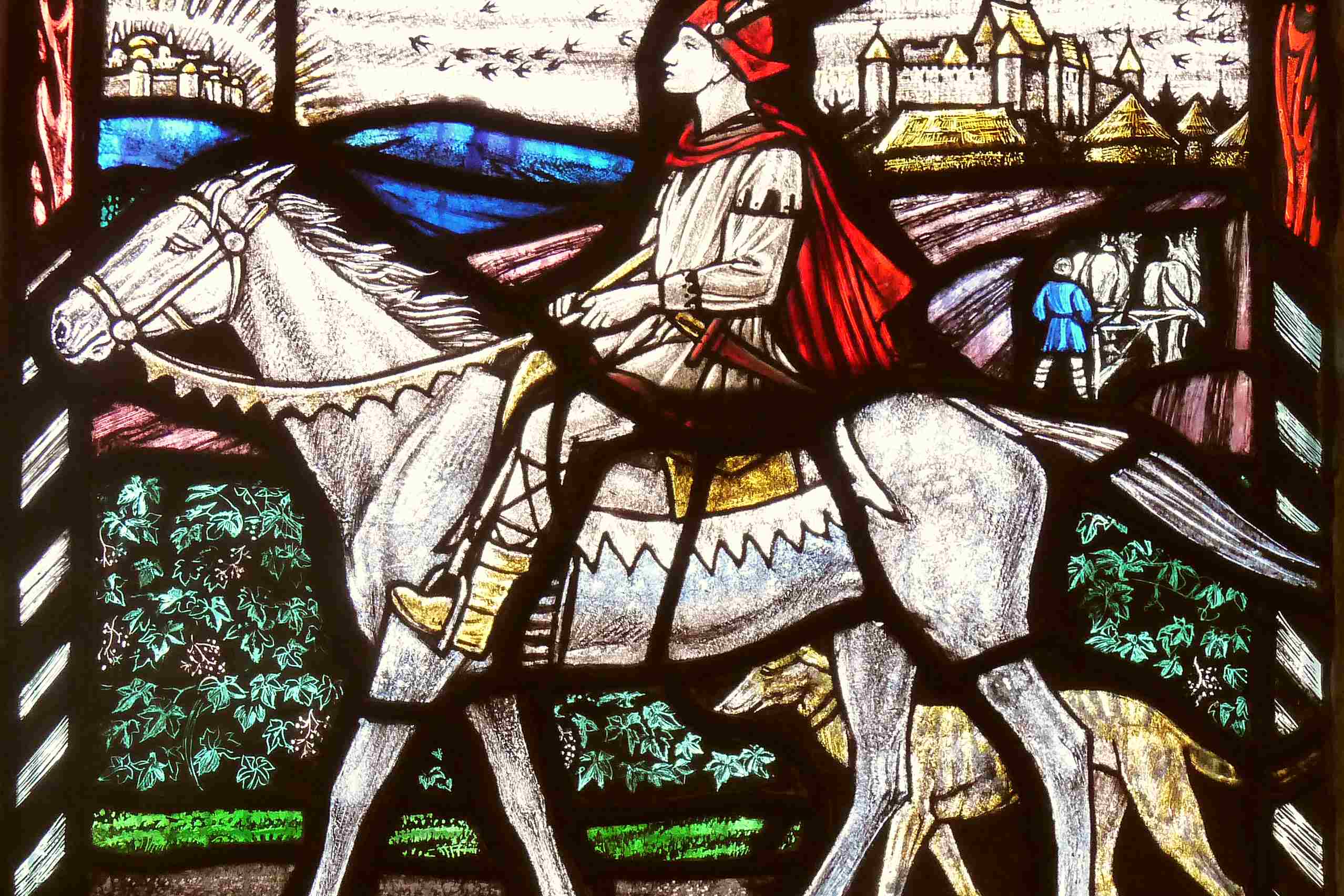
Each of the members of the Margaret Rope Appreciation Group has their own favourite windows, and it so happens that The Prodigal Son series at Lanark RC Church is the choice of one of us. So, it’s good to see that a book telling the history of Lanark Church, and describing the artworks therein, has just been published.
The Unique History of St Mary’s Lanark by Siobhan Gainford, a parishioner at Lanark, is out now. For Margaret Rope fans, it has the bonus of being a helpful source in thinking about how Marga came to be commissioned to do windows there, and what the context was for her.
Home from home
In quite a few ways, Lanark is similar in appearance to Shrewsbury Cathedral, Marga’s home church. It is in Gothic Revival style, built in 1859, around the same size as Shrewsbury, and also relied on the patronage of a local wealthy family to establish it. The excellent stained-glass in the church was mostly by the firms of Ballantine and Hardman, with Ballantine producing the mid-century work and Hardman the post-1900. Hardman created many of the windows in Shrewsbury, so, if Marga did make the journey to Lanark (which is near Glasgow), as she might well have done, she would have felt at home.

Another reason for her to visit Lanark was that her aunt, Sister Joseph Burd, was a member of the order of nuns which staffed the adjacent charity hospital. It is even possible that her aunt was involved in getting the commission for her.
Empty space
As Siobhan recounts in her book, there was a terrible fire at the church in 1907. However, as happens, this became a good opportunity for significant reconstruction and enlargement. Among other add-ons, a south sanctuary was built – and it needed stained-glass… and Marga was asked to supply it.
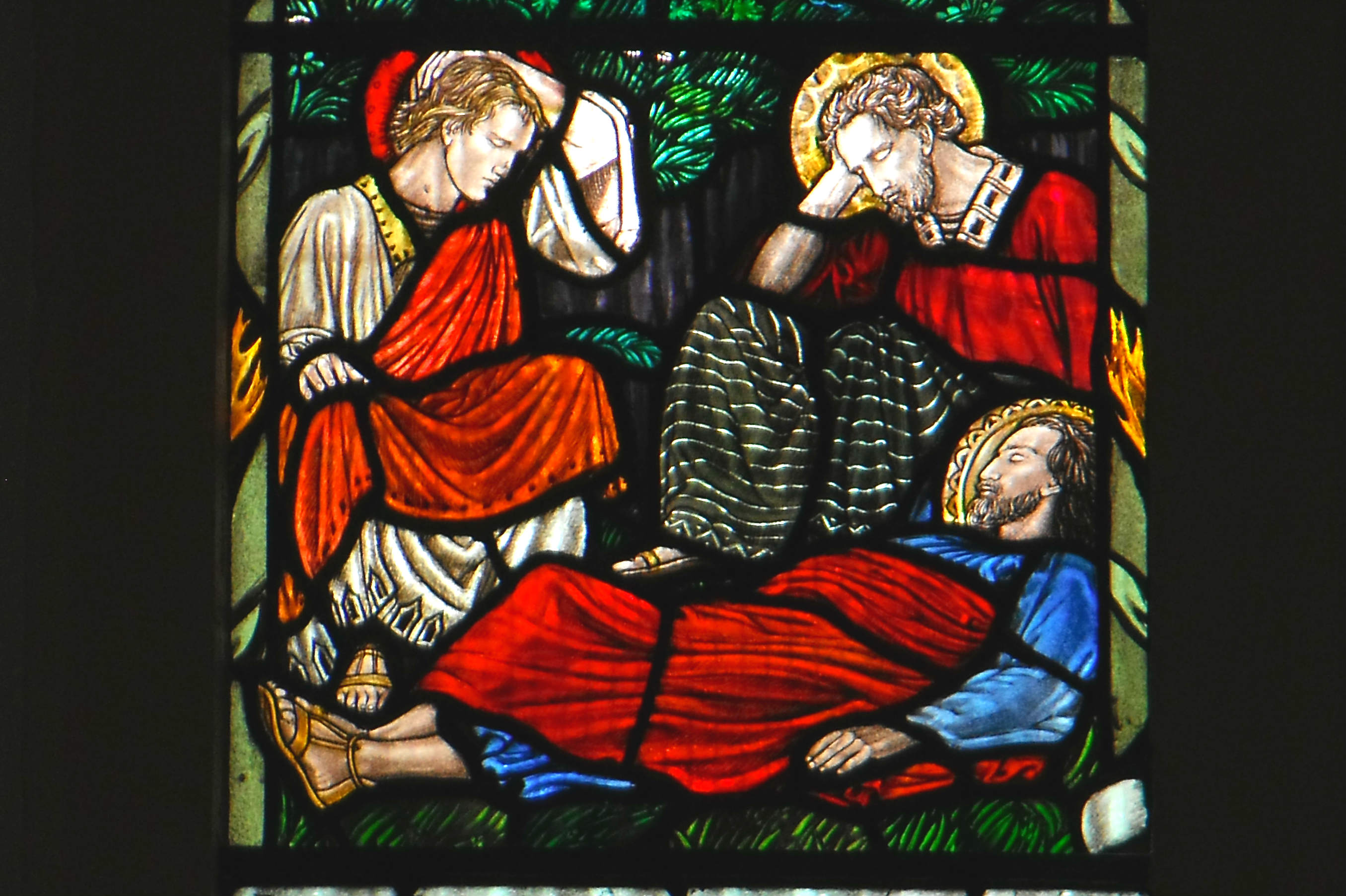
More research is needed to find any correspondence about any commission of Marga to do the glass, but it is clear that it was a radical choice. Much of the work in Lanark, both statuary and stained-glass, is professional, but is also typical 19th-century church art, serious and static, meant for silent prayer and contemplation. However, Marga’s two series here – The Prodigal Son and Passion Week – are a big contrast, being lively, colourful and vibrant, with lots of narrative action.
One almost wonders how she got away with it.
Admittedly, she is still something of a go-ahead ‘young gun’ at this point. At the time of the installation, 1915, she was only 33 years old and fresh from her huge triumph, the Shrewsbury Cathedral West Window.
Did she persuade them that a up-to-date approach was needed, or did they actively seek her out, wanting something more modern?
Book
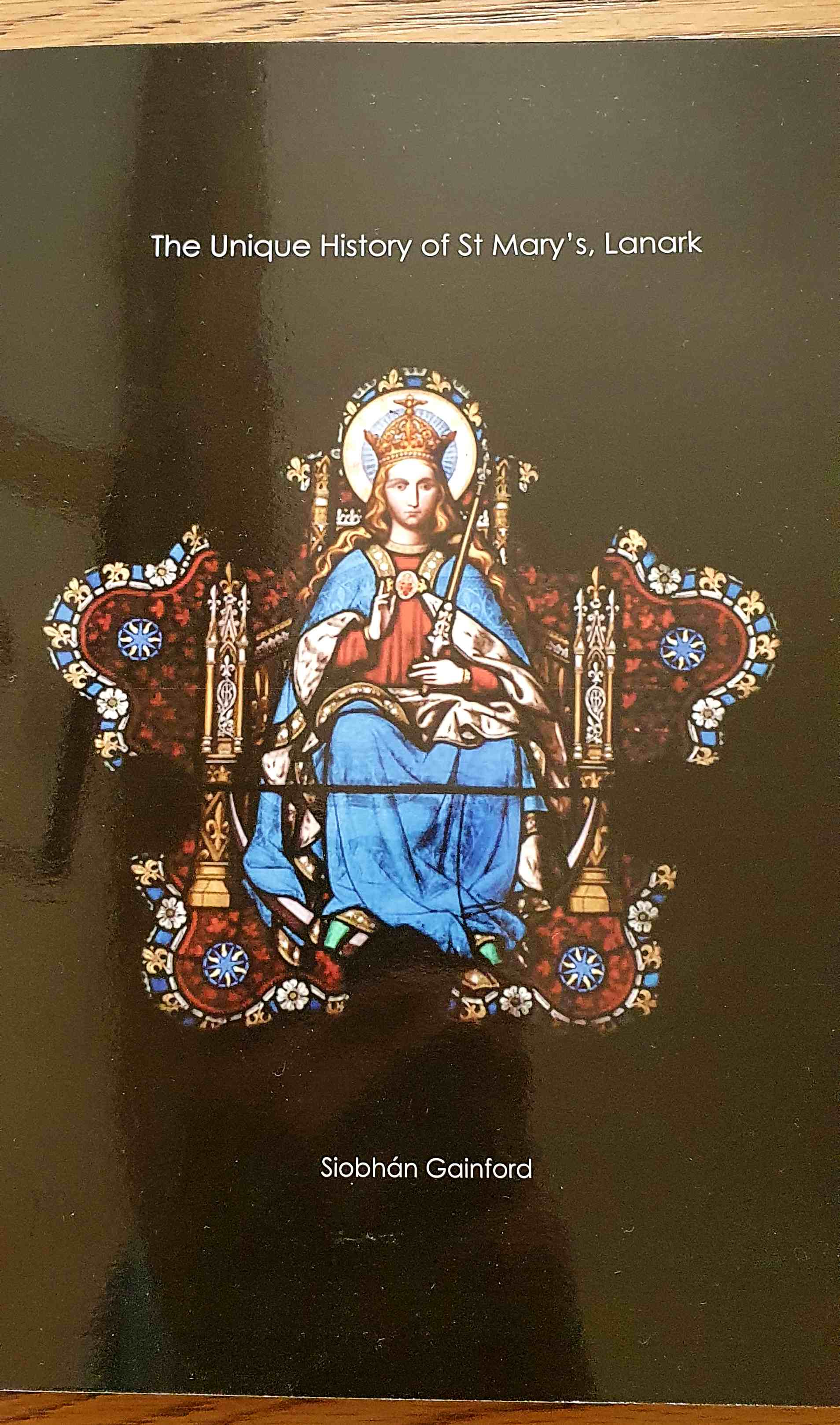
But, back to Siobhan’s book, which is astonishing on two levels (and probably more!).
The amount of research she has carried out, not just on the church’s history but on the artworks within and around the building is phenomenal. One loses count, but she must have listed around one hundred of the pieces, including stone-carvings, stained-glass, statues and even the beautiful tiles, all with lengthy descriptions. In this sense it becomes an extended church trail.
It’s pleasing too that there is a scholar’s understanding of the architectural and decorative forms; and it’s even more pleasing that the right names and terms have been applied to them.
It is also astonishing in being so professionally produced. There are dozens and dozens of excellent photographs, not just ones relating to the history but also to the works (including ones of Marga’s windows). The overall design of it is masterly.
It is even more astonishing in that this is a self-published book, relying on Siobhan’s own efforts to ensure its production.
(It does make one wonder why more churches don’t do this sort of book; it is almost a template for similar sorts of histories, and every church congregation in the country should buy one, just to see how it can be done).
The Unique History of St Mary’s Lanark (which also tells the story of the next-door St Mary’s charity-hospital, as well as the story of the nuns, the Daughters Of Charity Of St Vincent De Paul, who ran it) runs to 138 pages, and costs £15 to buy. It also has an exhaustive list of the sources that have been used, which is very useful. Please apply to the author Siobhan Gainford to purchase one – and cross your fingers that some are left.
+++++++
Some Marga References
Another of Marga’s window, the ‘Virgo Potens’, was also installed, on another site, in the town of Lanark (Siobhan does mention it in her book). Unfortunately it is now lost. For its story, click here
Sister Joseph was not the only Catholic nun in Marga’s immediate family. Another aunt, Sister Constance, was also truly formidable and also involved in hospitals for the poor working in Scotland to start with. For Constance’s story, click here
One of Marga’s Lanark panels shows a ‘Pelican In Her Piety’ image. Click here for an analysis of how that image might have been viewed.
+
If you’d like to comment on this article, please use the Comments Box below
To receive an email alert, about once a month, to tell you when a new article appears on this website, see the button marked ‘Get Alerts via Email‘ on the top right side of this page, then put your email address in the empty box; then click ‘Follow‘
 Celebrating Margaret Rope - stained glass-artist